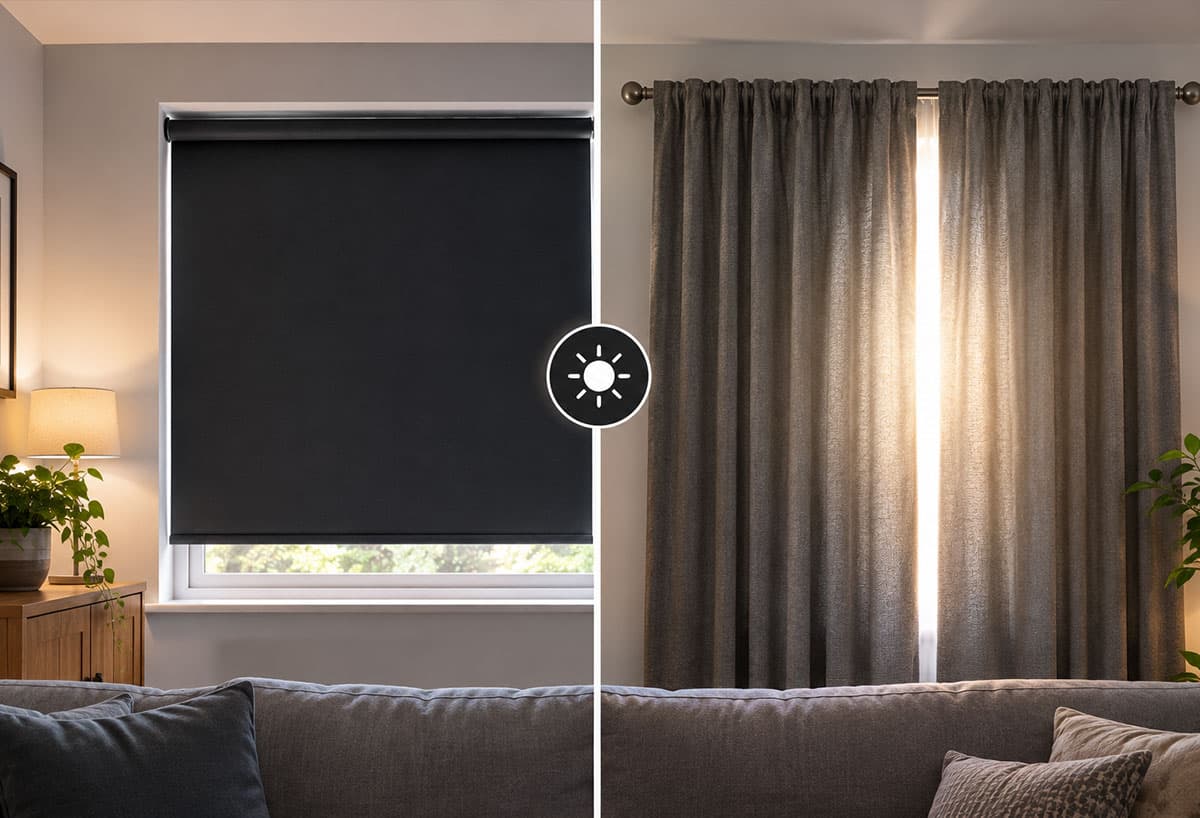
Can Blackout Blinds Help Reduce Eye Strain?
Can blackout blinds reduce eye strain? Blackout blinds might be helpful if visual stress or eye strain occurs due to direct sun exposure or reflection on the screen.

Table of Contents
Quick Answer
Can Blackout Blinds Help Reduce Eye Strain?
How Bright Light and Glare Affect Your Eyes
Blackout Blinds and Eye Strain During Screen Use
How Blackout Blinds Can Help Reduce Eye Strain
Choosing Blackout Blinds for Eye Comfort
FAQs
Quick Answer
Can blackout blinds reduce eye strain? Blackout blinds might be helpful if visual stress or eye strain occurs due to direct sun exposure or reflection on the screen. In this case, blackout blinds can minimize the amount of natural light coming into the room and decrease screen reflections. But blackout blinds do not cure eye strain, and complete darkness is not needed. It is crucial to have proper lighting, take screen breaks, set up screens correctly, and eliminate other vision issues.
Can Blackout Blinds Help Reduce Eye Strain?
Yes, can blackout blinds help reduce eye strain is a reasonable question, particularly if your room receives strong direct sunlight or creates glare on a computer or television screen.
The important distinction is that blackout blinds do not treat eye strain itself. Instead, they can help control one environmental factor that may contribute to discomfort: excessive brightness or glare.
The Mayo Clinic lists bright light and glare among potential causes of eye strain and recommends adjusting lighting and reducing glare when working with screens. It specifically suggests closing blinds or shades when sunlight is contributing to screen glare.
This means blackout blinds for eye strain may be useful as part of a more comfortable room setup, especially when your windows receive intense sunlight.
How Bright Light and Glare Affect Your Eyes
Your eyes continually adapt to the brightness and contrast conditions surrounding you. The entry of sunlight through an adjacent window and its reflections from the monitor can create problems in seeing the screen.
Some of the actions that you may perform in response to this problem are squinting, changing your posture, raising the brightness of the screen, and straining your eyes. These actions can be among the sources of the eye strain that develops during extensive use of the screen.
Some of the common signs of eye strain are:
Fatigued or painful eyes
Dryness or watering of eyes
Blurriness
Headache
Sensitivity to light
Difficulty concentrating
This is where light-blocking blinds can become useful. By controlling incoming sunlight, they can help create a more consistent lighting environment around your screen.
Blackout Blinds and Eye Strain During Screen Use
When considering blackout blinds and eye strain, focus on glare rather than darkness alone.
For instance, picture an office set up at home with a huge window right behind the computer screen, where the sun could cause reflections off the screen at particular times of the day. Closing the blinds will help reduce the light reflecting from the screen, making it easy to see on the screen.
The American Academy of Ophthalmology suggests reducing any glare and altering the screen brightness and lighting to help reduce discomfort while using a digital device.
Darkening the entire room while maintaining a very bright monitor could create another uncomfortable contrast.
Some considerations include:
Avoiding any position where the monitor reflects sunlight.
Closing the blinds in case of reflections of sunlight.
Adjusting the screen brightness in accordance with the room's lighting.
Frequent breaks from working at a distance from the screen.
Regular blinking to avoid the problem of dry eyes.
The 20-20-20 rule is another consideration made by the eye care guidance, which involves looking at something about 20 feet away from you for about 20 seconds every 20 minutes.
How Blackout Blinds Can Help Reduce Eye Strain
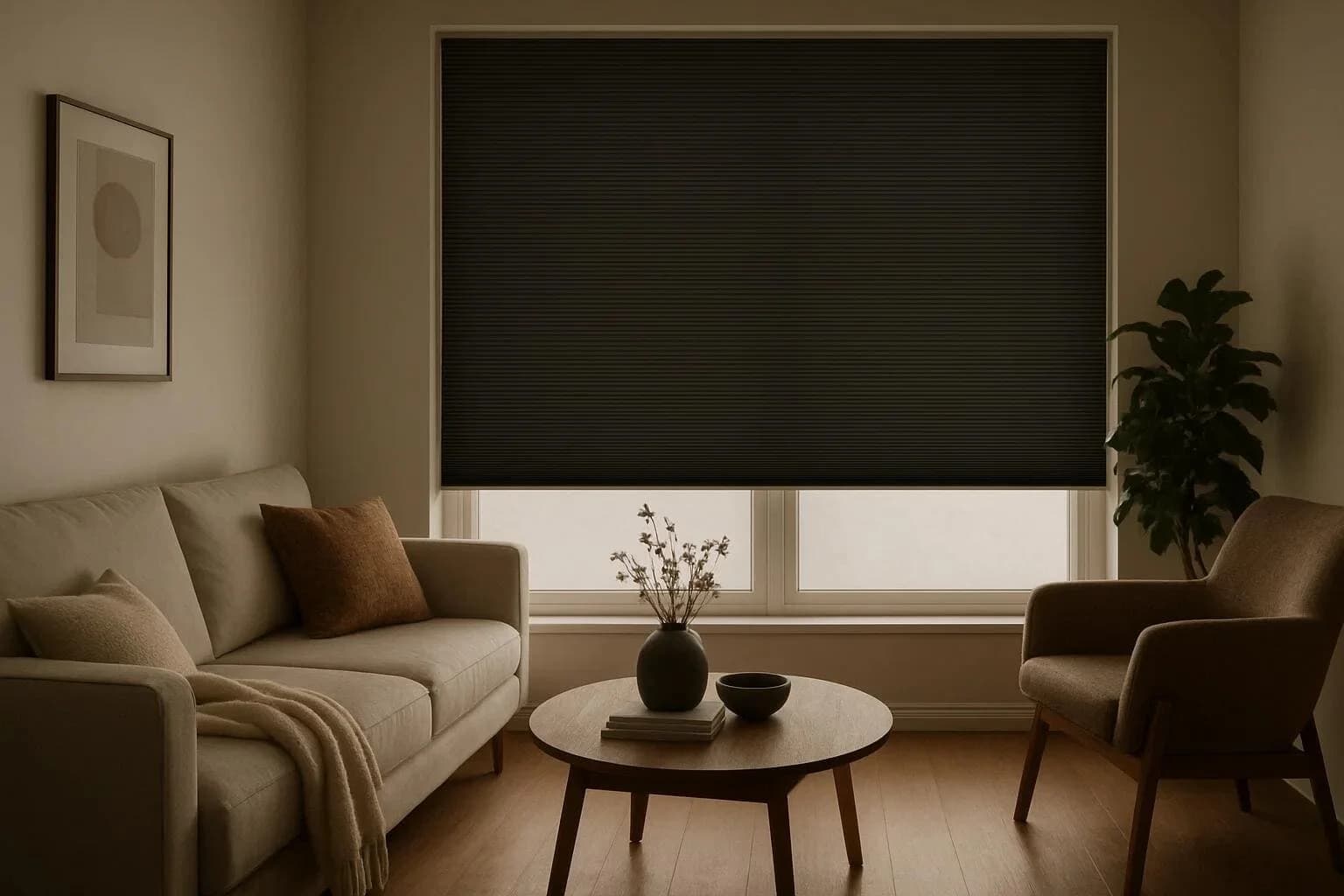
Bright sunlight and glare can make screens harder to view, causing you to squint or adjust your eyes more often. Blackout blinds reduce the amount of light entering a room, creating a darker, more controlled environment.
This can be especially useful in home offices, bedrooms, and media rooms where excessive brightness or screen glare is common. However, blackout blinds do not directly treat eye strain. They simply help control one environmental factor that may contribute to visual discomfort.
Cause of Discomfort | How Blackout Blinds Help |
Bright sunlight | Reduces incoming light |
Screen glare | Creates a darker viewing environment |
Uneven room brightness | Helps maintain more consistent lighting |
Excessive daytime brightness | Gives you greater control over natural light |
Choosing Blackout Blinds for Eye Comfort
When choosing blinds for bright sunlight, look beyond the word "blackout."
The fabric is only one part of the overall system. Light can also enter through gaps around the sides, top, or bottom. A properly fitted covering can therefore provide better control than an oversized or poorly fitted blind.
When comparing options, consider:
Window orientation and direct sunlight
Screen or television position
Inside versus outside mounting
Side and top gaps
Ease of operation
Fabric opacity
Whether the blind can be adjusted throughout the day
The right blackout window covering for your home depends on how you use the room. A home office may benefit from flexible light adjustment, while a bedroom may prioritize stronger darkness.
Conclusion
Blackout blinds can reduce eye strain when bright sunlight or screen glare causes visual discomfort. By limiting harsh light and reflections, they can make your home office, bedroom, or media room more comfortable throughout the day.
However, blackout blinds are only one part of a comfortable screen setup. Adjusting screen brightness, reducing glare, taking regular breaks, and maintaining balanced room lighting are equally important. If eye strain continues despite these changes, consider speaking with an eye care professional to rule out an underlying vision issue.
FAQs
Are blackout blinds good for people sensitive to bright light?
It allows more control over daylight entering through the window, and it might be helpful for people who feel uncomfortable in bright surroundings. Any persistent light sensitivity requires consultation with an eye care specialist.
What are the best blinds for reducing glare?
Blinds that enable you to adjust to direct sunlight can help with eye strain. Blackout, room-darkening, and adjustable light filters can all prove to be beneficial.
Should I make my room completely dark to prevent eye strain?
Not necessarily. A comfortable balance between the screen and surrounding room is generally more practical. Excessive contrast between a bright screen and a completely dark room can also be uncomfortable.
When should I see an eye doctor about eye strain?
If you have continuing issues even after making changes to your surroundings and behavior at the screen, you need to consult an eye-care specialist. Sometimes, continuing symptoms can point towards a vision problem.
Subscribe to our Newsletter
Stay updated with sleep guides, bedroom decor inspiration, and exclusive product news.
Anna
Contributing writer and editor specializing in light control, bedroom aesthetics, and modern sleep science.