How to Make Your Bedroom Dark With 4 Simple Hacks No One Tells You About
Can’t get your room dark enough? Four simple fixes to block window light, cover small glows and darken a room during the day.

Quick Answer
To make a room dark during the day, stop light coming around the window, not just through it. Fit a blind inside the window frame, add a curtain over it if you need more, and cover small lights like chargers and the gap under the door.
How to Make Your Bedroom Dark: 4 Simple Hacks
The presence of streetlights, morning sunlight, and lit electronics may make it challenging to maintain darkness in your bedroom. The good thing is that you don’t have to replace all your furniture or change the whole setup in your room to achieve this.
These four hacks will assist you in making your bedroom darker and more comfy, whether you require night darkness or daytime sleeping conditions.
1. Fix the Light Leaking Around Your Windows
The hack: Find the gaps, not just the brightest part of the window.
Even though you may already have curtains or shades, there can still be light seeping in from the edges. Even though blackout material prevents the light from passing through the material itself, it doesn’t mean it will stop any light from seeping in from the sides, top, or bottom.
Check your window coverings in daylight first. Look for any spaces that the material doesn’t cover, between curtain panels, or any light seeping in from above your curtain rod.
If you're wondering how to make bedroom darker without replacing your entire setup, try these adjustments first:
Overlap curtain panels to close the gap in the middle.
Use a curtain track or wraparound rod that brings the fabric closer to the wall.
Check whether your blinds are wide enough to cover the window adequately.
Consider blackout blinds with side tracks if light continues to leak around the edges.
Different window coverings provide different levels of coverage depending on their design and installation. Our guide to choosing the right blackout window covering explains the differences between common options.
The key is to address the route the light takes into your room rather than simply choosing thicker fabric.
2. Layer Your Window Coverings Strategically
The hack: Use layers to address different light problems.
A single window treatment might not be sufficient, especially if your bedroom is facing a busy street or getting light directly in the morning. A combination of window treatments would cover more space while providing greater flexibility in adjusting the look of the room.
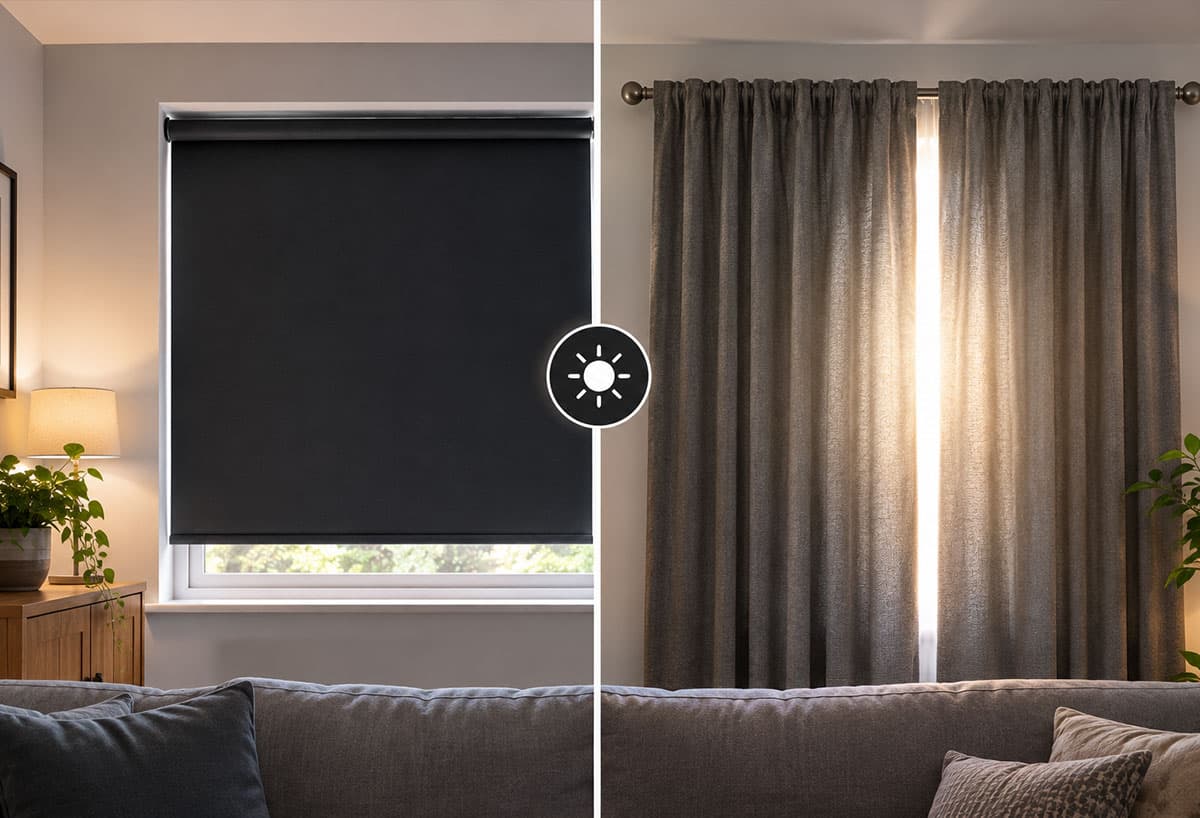
For instance, you can use blackout blinds together with decorative curtains, where the blinds serve as a primary light-blocking device, whereas the curtain adds an extra layer and gives an elegant look to the room.
It is not always essential to have window treatments in layers, as your current curtains might create too many gaps for light to enter. In such cases, an additional layer of curtains will not solve the problem.
When deciding how to make your room darker, consider these options:
Blackout curtains: Useful for covering large windows, particularly when the panels overlap and extend beyond the frame.
Blackout roller blinds: Offer a streamlined appearance and block light through the fabric.
Cellular blackout shades: Combine light control with a honeycomb structure that can help reduce heat transfer.
Custom-fit blackout systems: May provide better edge coverage when designed to minimize gaps around the window.
The right choice depends on your window dimensions, preferred style, and how much light enters the room. A close-fitting blackout system may be more effective than adding layers to curtains that already leave substantial gaps.
3. Block the Small Light Sources You Overlook
The hack: Check your bedroom after switching off the main lights.
After you deal with the windows, do another scan of the room. There may be a glowing charger, a digital clock, a standby light from the TV, or even light from the hallways.
These small sources are easy to overlook during the day but may come into focus when you’re trying to get to sleep.
Try these simple changes:
Cover bright indicator lights with manufacturer-approved light-blocking covers, ensuring you don't obstruct ventilation or create a safety risk.
Turn digital clocks away from the bed or use a dimmer display setting.
Switch off unnecessary electronics instead of leaving them in standby mode.
Close the bedroom door and use a door draft stopper or rolled towel to reduce light entering underneath it.
Choose dim, warm-toned lighting in the evening instead of bright overhead lights.
If you're searching for how to make my room darker on a budget, these adjustments are a sensible starting point because they don't require new window treatments.
You can also keep a comfortable sleep mask nearby. It won't darken the room itself, but it can help block light reaching your eyes when you can't eliminate every source.
4. Darken Your Room During the Day
The hack: Treat daylight differently from nighttime light.
Figuring out how to make your room darker during the day can be even more challenging since the angle and strength of the sunlight vary depending on the time of day. For example, a room that is dark in the morning may be very bright by midday.
Start by observing when direct sunlight enters your room. If the window receives strong afternoon sun, a covering that works well at sunrise may not provide enough coverage later helps in the morning might be inadequate in the afternoon.
There are several ways to deal with the problem of excessive brightness:
Close your blackout blinds before the sunlight enters your room.
Look at the sides of your window cover as the position of the sun changes.
Make sure to get blackout curtains or blinds that fit your windows correctly.
You may want to get a specially made set with side tracks to further block out any light.
If you rent or need something temporary, make sure you use an appropriately sized removable blackout curtain.
For bedroom areas where you take your afternoon naps or sleep at night for work, a consistently covered window may come in handy. The idea is to manage light exposure without resorting to ad hoc window coverings.
Haven Shades' Premium Blackout Haven Shade features blackout fabric and a track system designed to help reduce light gaps. Accurate measurements also matter when choosing custom-fit shades, which is why the Haven Shades measuring guide is useful before selecting a suitable size.
Frequently Asked Questions
1. What is the easiest way to make a bedroom darker?
Begin by sealing any spaces between current blinds or curtains, turning off any indicator lights that aren’t necessary, and blocking light underneath the door. If light seeps in through the gaps in the windows, try using more effective blackout shades.
2. How can I make my bedroom darker without buying new curtains?
Adjust your current curtain panels, seal indicator lights carefully, block hallway light, and wear a sleep mask if necessary. This will help you to some degree, even though it won’t necessarily block any sunlight passing through the windows.
3. Do blackout blinds make a room completely dark?
No, they usually are not. Although blackout blinds prevent any light from passing through the blind fabric, any daylight can seep through the gaps around it. It will depend on the particular installation of your blind.
4. How do I make my room darker during the day for sleeping?
Use an appropriately designed black-out window cover, examine any gaps along its edges, and then close the cover to prevent bright light from entering the room. A sleep mask would further assist with residual light.
5. Can a darker bedroom help improve sleep?
Darkness can help ensure proper sleep by reducing unnecessary light. Light helps regulate the body's sleep-wake cycle, so minimizing light at night can help maintain consistency. The sleep requirements of people differ.
Subscribe to our Newsletter
Stay updated with sleep guides, bedroom decor inspiration, and exclusive product news.
Jonas
Contributing writer and editor specializing in light control, bedroom aesthetics, and modern sleep science.