
Cellular vs Roller Blackout Blinds: Which One Actually Blocks Light?
Cellular and roller blinds both get sold as "blackout," but they perform very differently once you factor in insulation, noise, and how much light actually leaks around the edges. Here's the real comparison.

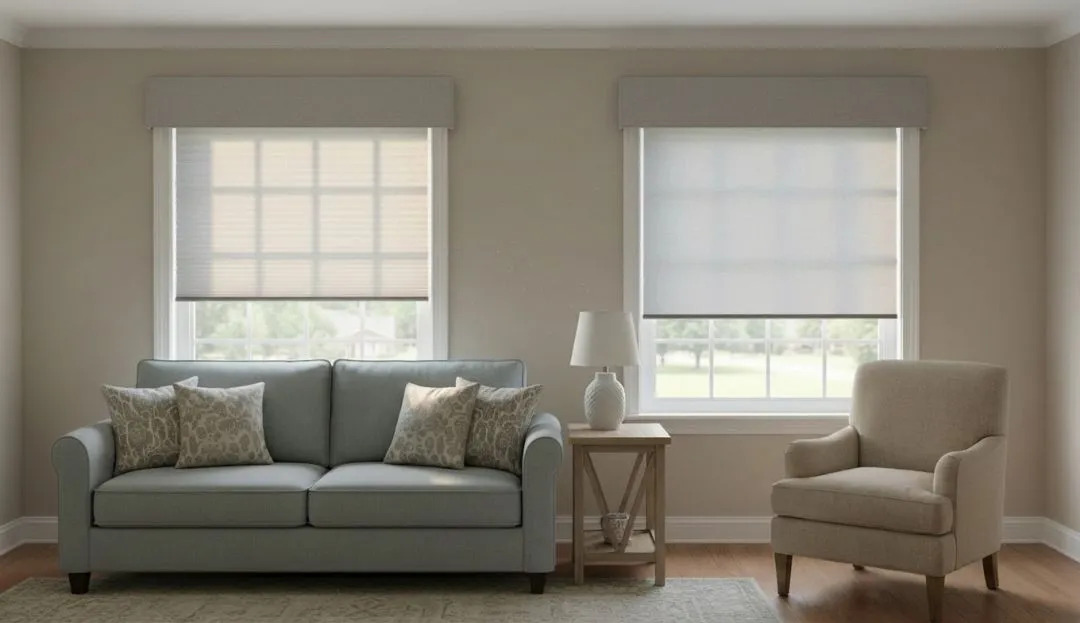
Quick answer: Cellular (honeycomb) blackout blinds outperform roller blackout blinds on light seal, thermal insulation, and noise reduction, because their folded structure traps air and can be paired with an edge-seal track. Roller blackout blinds are simpler, slimmer, and cheaper, but flat fabric against a single roll tends to leave side-gap light unless the frame is tightly channeled.
Both are marketed as "blackout." Only one of them tends to deliver on that word in a bedroom that actually needs to be dark.
What Are Cellular Blackout Blinds?
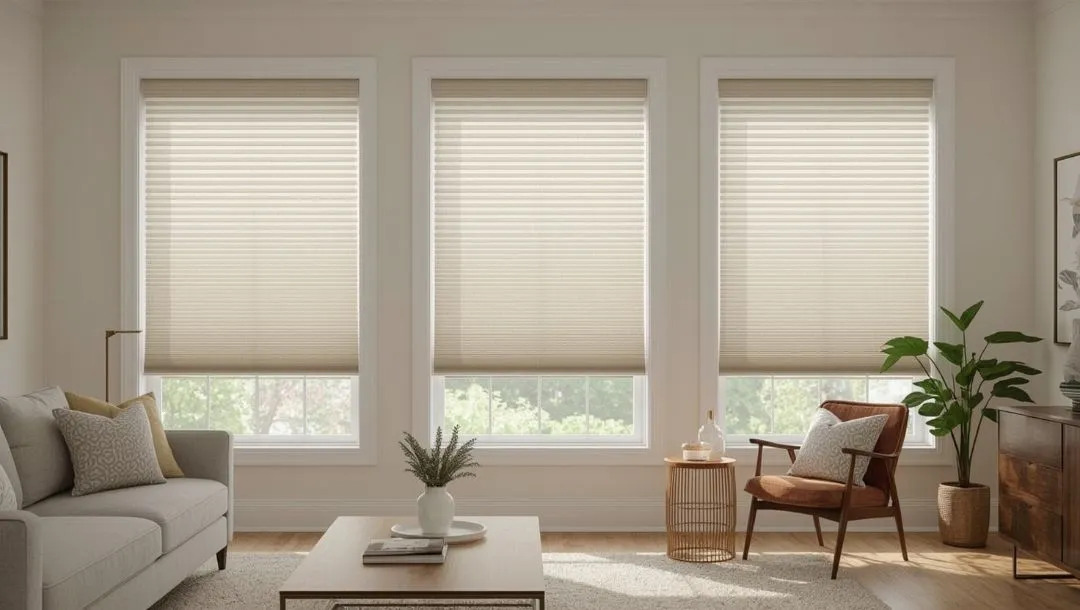
Cellular blackout blinds also called honeycomb blinds — are made from two or more layers of fabric fused together into rows of hexagonal pockets, or "cells," that collapse flat when the blind is raised and expand when lowered. The trapped air inside each cell is what gives the style its name and its main advantage: insulation. Because the layered structure has more depth to work with, cellular blinds are also easier to pair with an edge-seal track that presses the fabric against the frame on all four sides, which is what actually stops light from leaking in around the edges.
What Are Roller Blackout Blinds?
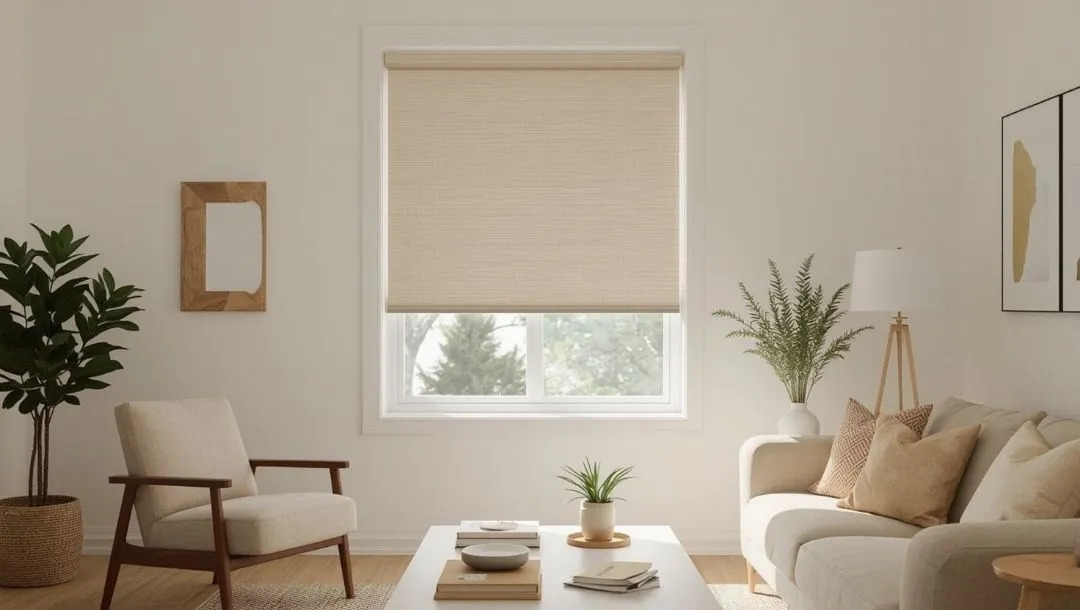
Roller blackout blinds are made from a single layer of tightly woven or vinyl-backed opaque fabric that winds around a headrail tube. Raising or lowering the blind simply rolls or unrolls that one layer flat against the window. The mechanism is simple and low-profile, which keeps roller blinds among the most affordable blackout options — but with only one flat layer and no built-in side channel in most designs, light tends to find its way in along the edges even when the fabric itself blocks light completely.
Cellular vs Roller: Side-by-Side
Cellular Blackout Blinds | Roller Blackout Blinds | |
|---|---|---|
Light block | Near-total with edge-seal track | Good center coverage, gaps common at sides |
Thermal insulation | High — trapped air pockets reduce heat transfer | Low to moderate — single fabric layer |
Noise reduction | Meaningful — honeycomb absorbs ambient sound | Minimal |
Profile | Slightly deeper stack | Slim, low-profile |
Typical price | Mid to premium | Budget to mid |
Best for | Bedrooms, nurseries, media rooms | Kitchens, offices, casual light control |
Why Side-Gap Light Is the Real Test
Most "blackout" roller and cellular blinds sold off the shelf are blackout in the sense that the fabric itself doesn't let light through. That's not the same as blocking light at the window. Standard blinds — cellular or roller — are cut a little narrower than the frame so they don't rub against it, and that clearance is exactly where morning light gets in.
This is the detail our types of blackout blinds guide covers in more depth: the fabric type matters less than whether the blind is built with a system that seals the frame edges, not just the center of the glass.
Cellular construction makes that easier to solve because the folded fabric has more depth to work with at the track. That's the gap custom blackout blinds with a dual-layer honeycomb fabric and edge-seal track are built to close — sealing all four sides against the frame instead of relying on the fabric alone to do the work.
Which One Should You Choose?
Need genuine darkness for sleep, shift work, or a nursery → cellular blackout with an edge-seal system. This is the only combination that reliably eliminates side-gap light.
Want moderate light and glare control for a kitchen, office, or living room → roller blackout is usually enough, and the lower cost and slim profile are worth the trade-off there.
Care about temperature and noise as much as darkness → cellular wins on both, since the same trapped-air structure that blocks light also insulates and dampens sound.
Budget is the primary constraint → roller blinds cost less upfront, but factor in that a poorly sealed blackout blind often gets replaced within a year once the light-leak issue becomes obvious.
For patio doors and larger openings specifically, the sizing math changes — see our guide on choosing the right blackout window covering for your home for how to match either style to non-standard windows.
Common Questions
Are cellular blinds more expensive than roller blinds? Generally yes. Cellular blackout blinds cost more than roller blackout blinds because of the dual-layer construction and, when included, the edge-seal track hardware — but the difference typically shows up in performance, not just materials.
Can a roller blind ever achieve true blackout? Only with a channel or track system that presses the fabric against the frame on all sides. A roller blind without that system will always have some side-gap light, regardless of how dense the fabric is.
Do cellular blackout blinds help with noise from outside? Yes. The honeycomb air pockets absorb some ambient sound at the window, which roller blinds — being a single flat layer — don't do to the same degree.
Is cellular or roller better for a nursery? Cellular, if full darkness for naps is the goal. The combination of blackout fabric and edge-seal track is what prevents the early-morning light leak that tends to cut naps short.
The Short Version
Roller and cellular blackout blinds solve different problems even though both get labeled "blackout." Roller is the simpler, cheaper option for everyday glare control. Cellular — especially paired with an edge-seal track — is the one built for rooms where light has to be fully gone. For the full category breakdown across every blind type, our pillar guide on blackout blinds covers the rest of the options side by side. If you already know cellular with a true seal is what you need, our measuring guide and installation guide cover sizing and the no-drill mount.
Subscribe to our Newsletter
Stay updated with sleep guides, bedroom decor inspiration, and exclusive product news.
Sarah Jenkins
Contributing writer and editor specializing in light control, bedroom aesthetics, and modern sleep science.


