Do Blackout Blinds Help Babies Sleep? What Parents Should Know
Do blackout blinds help babies sleep? What a dark nursery can and can’t do, and how to set up a nursery that’s dark, safe and comfortable.

Quick Answer
Yes. Blackout blinds can help, mainly by keeping naps and early mornings dark. A dark room helps in four practical ways:
Darker naps: Less light in the room, even at midday.
Darker early mornings: Blinds block the sunrise glare.
Fewer distractions: A dark room has less to look at.
Clearer day and night: Dark for sleep and bright for play keeps the routine simple.
Blackout blinds aren’t a complete solution. Hunger, teething, and overtiredness still wake babies, and newborns need daylight during their awake time. For the best results, choose a cordless blind made to your exact window size, so little light gets around it.
Do Blackout Blinds Help Babies Sleep Longer? What the Evidence Shows
Babies are born without a set sleep rhythm, and it develops over their first months. Light is one of the things that shapes it, which is why many parents keep naps and bedtime dark. For questions about your own baby’s sleep, ask your pediatrician.
A room that is reliably dark at nap time and bedtime gives your baby a clear, consistent routine.
We want to be honest about the limits. No study shows that a particular blind adds a set number of minutes to a baby’s sleep. What a well-fitted blackout blind does is keep the room dark through bright summer evenings and early sunrises.
Do Blackout Blinds Help Babies Nap?
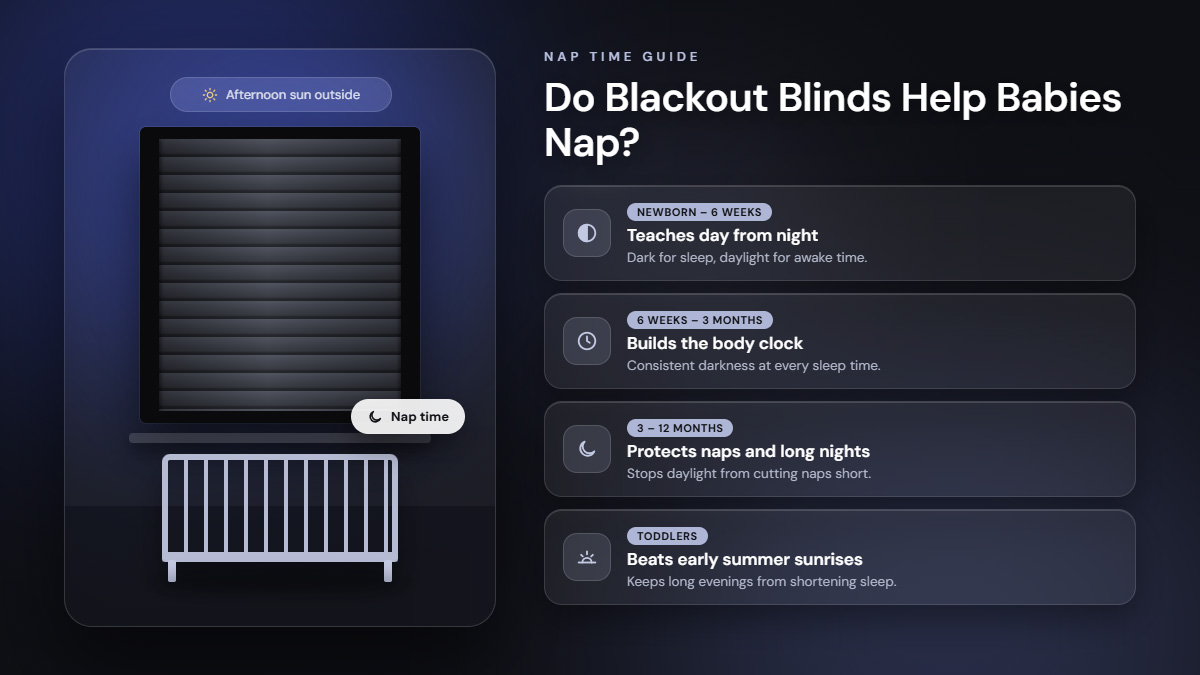
Yes, and naps are where most parents notice the difference first. Afternoon sun can turn a nursery into a playroom. Closing a blackout blind turns that bright room back into a sleep space in seconds, giving your baby the same “time to sleep” signal every time.
Blackout blinds help at sunrise too. Babies sleep lightly in the early morning, so the first light of day can be enough to wake them. Blocking that light removes one of the most common causes of early wake-ups.
Age | How blackout blinds help |
|---|---|
Newborn to 6 weeks | There’s no day-night rhythm yet. A dark room for sleep and daylight during awake time help teach the difference. |
6 weeks to 3 months | The body clock is forming. Consistent darkness at sleep times reinforces it. |
3 to 12 months | The rhythm is established. Blinds protect long night stretches and stop daylight from cutting naps short. |
Toddlers | Blinds keep summer sunrises and long evenings from shortening sleep. |
What to Look For in Blackout Blinds for Infants
Three features decide whether a blackout blind actually works in a nursery:
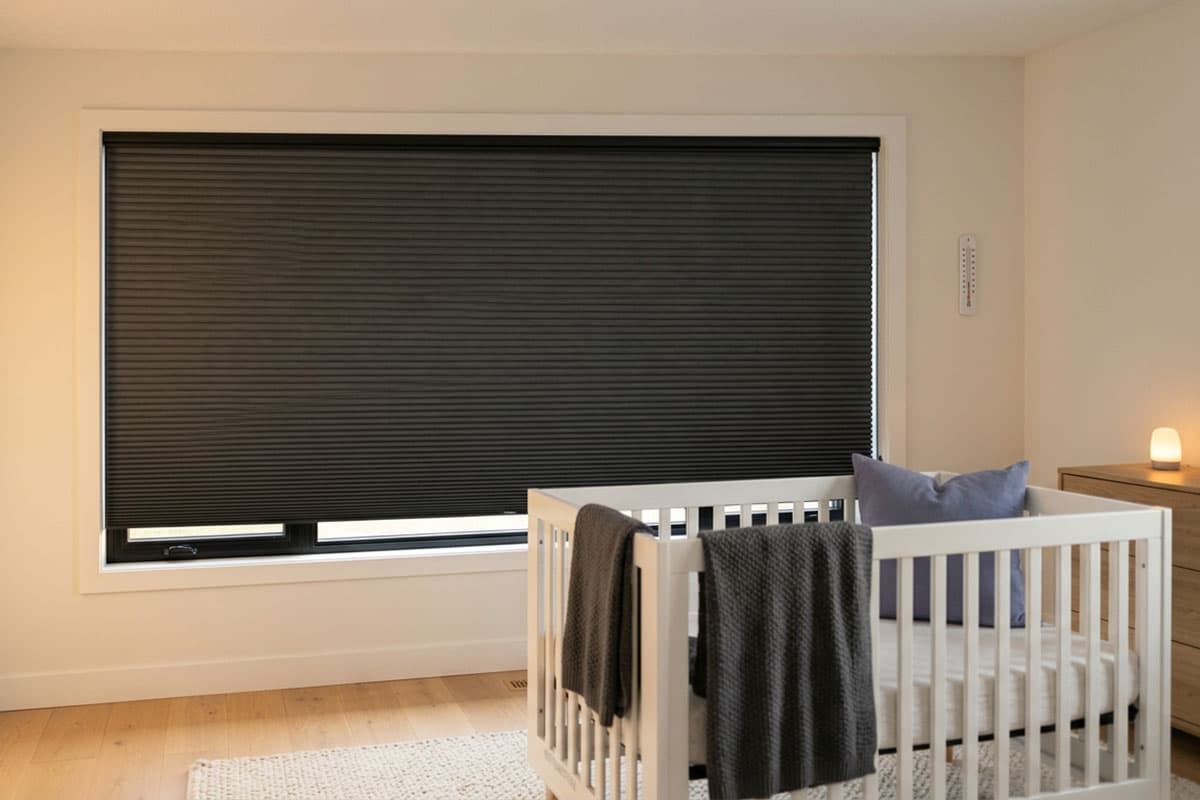
Fewer light gaps. Most blackout blinds leave gaps at the sides, where light gets around the fabric. The Haven Shade uses dual-layer, 100% blackout honeycomb fabric in an aluminum frame made to the exact size of your window. Curtains and standard roller blinds rarely manage this.
Cordless operation. Health Canada recommends replacing corded window coverings with cordless ones in homes where children live or visit, and notes that any accessible cord, including cords on the side or back of a blind, is a strangulation risk. The Haven Shade is fully cordless, with a magnetic glide that opens and closes the shade, so there are no cords for children or pets to reach. Learn more about cordless blackout blinds.
An exact fit. A blind that’s even slightly too narrow leaves a gap, and a gap lets in light. Every Haven Shade is custom made to your window’s width and drop. Measure carefully with a steel tape, and follow our guide on how to measure for blinds step by step.
Installation is quick, too. The tension-mount system uses pressure screws instead of drilling, so you don’t need any tools, and our 15-minute install guide walks you through it. Each shade is made to order and ships within 7 days, which helps when you’re getting a nursery ready on a short timeline.
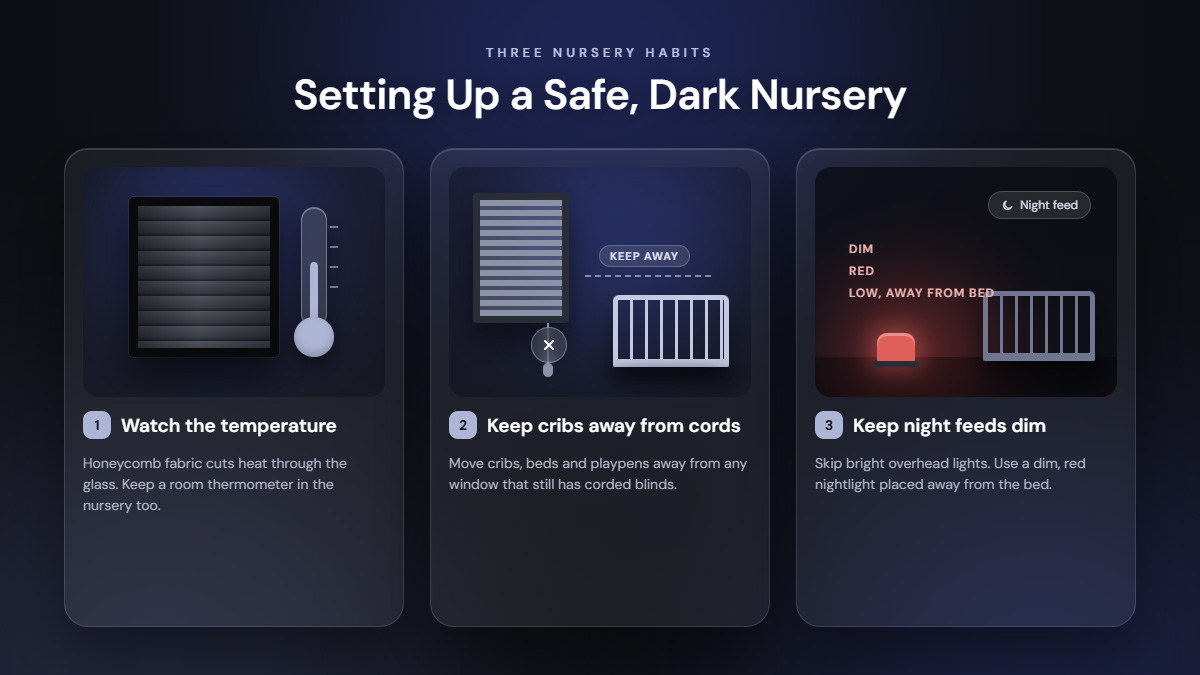
Setting Up a Safe, Dark Nursery
A dark room is only half the setup. Three habits keep a blackout nursery safe and comfortable:
Watch the temperature. Overheating is a known risk factor for SIDS. Health Canada advises that a room that feels comfortable to a lightly dressed adult is comfortable for your baby. The Haven Shade’s honeycomb fabric provides thermal insulation that reduces heat transfer through the glass, which helps on hot afternoons when the blind is closed for a nap, but keep a room thermometer in the nursery as well. Read more on whether blackout blinds keep heat out.
Keep cribs away from corded blinds. If any room in your home still has corded blinds, Health Canada advises keeping cribs, beds, and playpens away from those windows.
Keep night feeds dim. Bright overhead lights undo the darkness you’ve created. Researchers who study children’s sleep recommend that any nightlight be dim, red in color, and placed away from the bed.
The Haven Shade’s honeycomb fabric also reduces outside noise, from traffic to barking dogs, which helps protect daytime naps.
Create a Darker Nursery
A dark, quiet room is one of the simplest things to set up for naps, and a cordless blind made to fit your window keeps it dark. If you have concerns about your baby’s sleep, talk to your doctor or public health nurse.
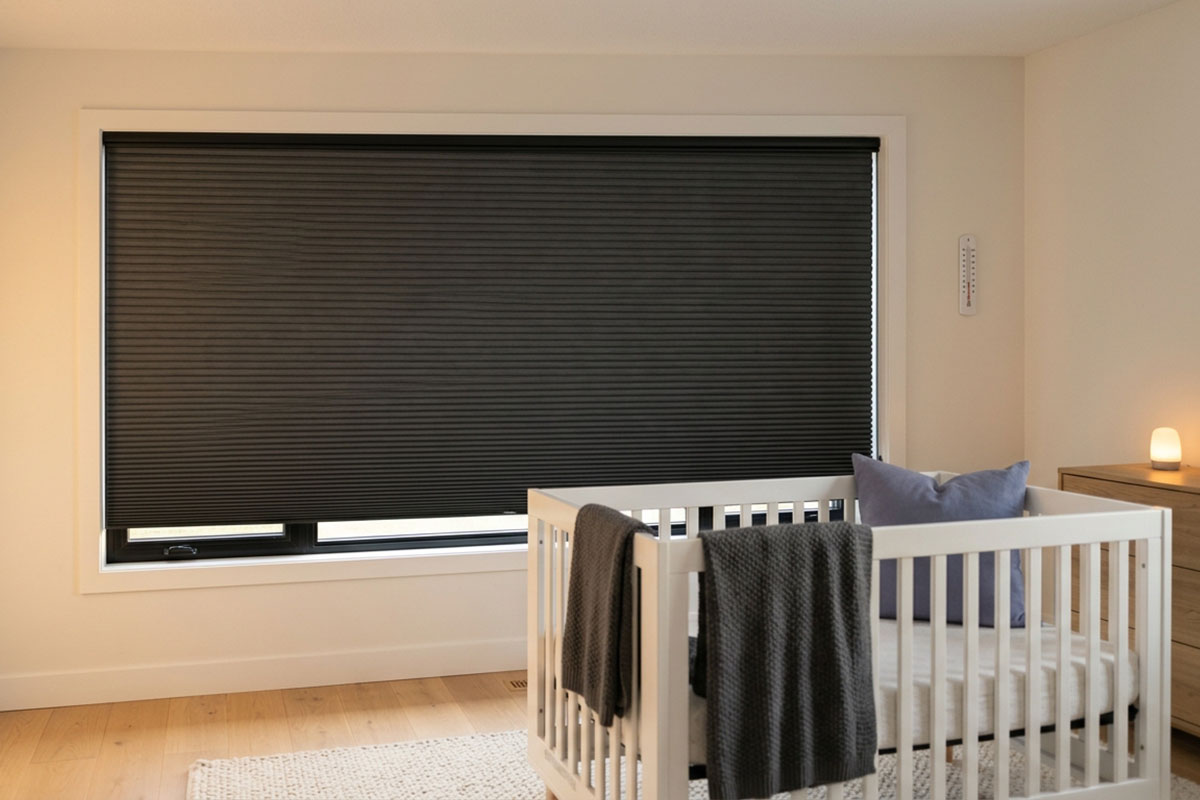
Ready to set up your baby’s room? See our blackout blinds for a nursery, shown in graphite gray fabric with a black frame. You can read customer reviews, or talk to a blackout expert for help choosing your size and color.
FAQs
Do blackout blinds help babies sleep through the night?
They can help, but they don’t guarantee it. A dark room keeps early light out in the morning. Hunger, growth spurts, and teething will still wake babies in the first months. Think of blackout blinds as one part of a good sleep routine, along with a regular bedtime and a comfortable room.
At what age should I use blackout blinds in a baby’s room?
You can use them from birth, at sleep times. Newborns don’t have a day-night rhythm yet, so a dark room for sleep and daylight during awake time helps that rhythm develop. The benefit usually becomes more noticeable around three months, when blackout blinds help protect longer naps and night sleep.
Are blackout blinds safe for infants?
Yes, as long as they’re cordless and the room stays at a comfortable temperature. Health Canada recommends cordless window coverings in children’s rooms. Make sure the blind has no cords, loops, or chains, and keep an eye on the room temperature.
Is complete darkness better than a night light for babies?
For most babies, a dark room is best for sleep. If you need light for night feeds, use a dim red light placed away from the crib, and turn it off afterward.
Do blackout curtains work as well as blackout blinds for baby sleep?
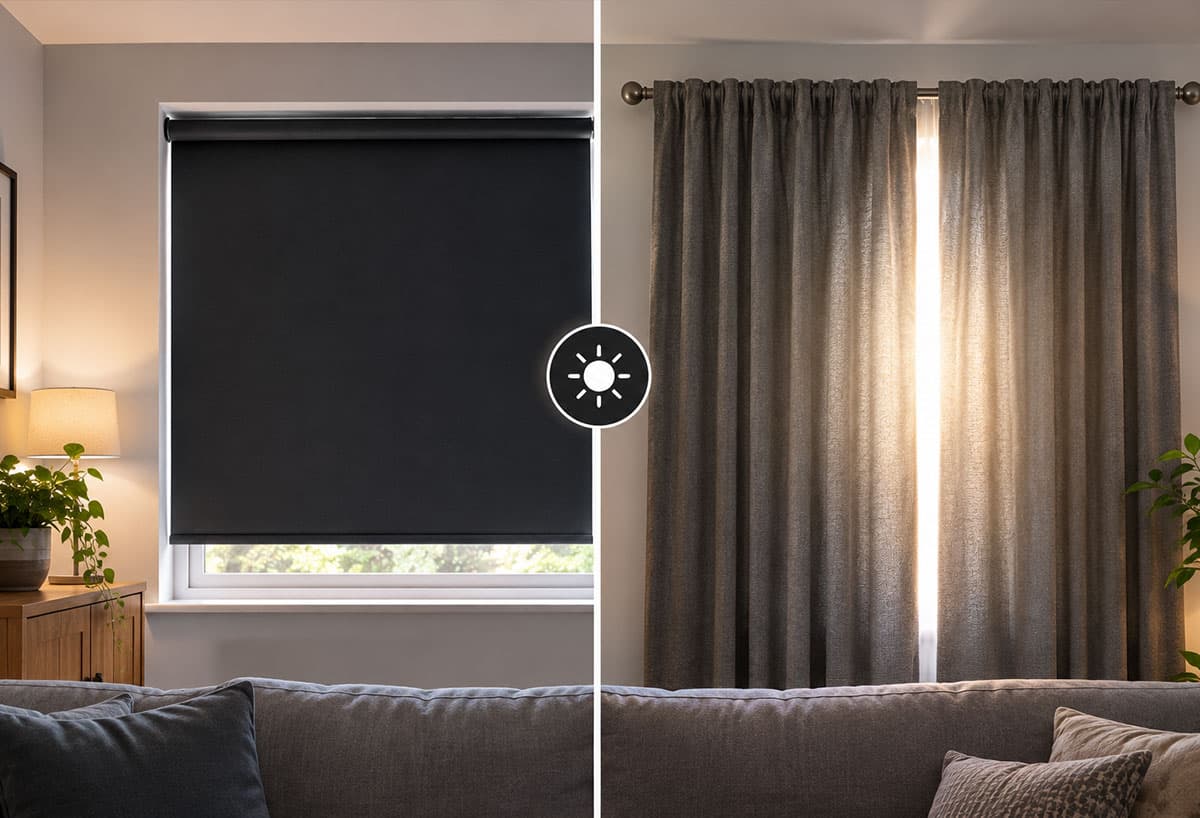
Usually not. Curtains leave gaps at the top and sides where light leaks through. A blackout blind made to fit the window leaves smaller gaps and blocks far more light. Curtains can add style, but a fitted blind does the real work of keeping the room dark. See our full comparison of blackout blinds vs curtains.
Subscribe to our Newsletter
Stay updated with sleep guides, bedroom decor inspiration, and exclusive product news.
Nick
Contributing writer and editor specializing in light control, bedroom aesthetics, and modern sleep science.