
Blackout Shades for Bedroom: The Complete Sleep Upgrade Guide
A bedroom is only as restful as its darkness. This guide breaks down why standard blinds leak light, what makes a shade truly "blackout," and how to choose one built for uninterrupted sleep.

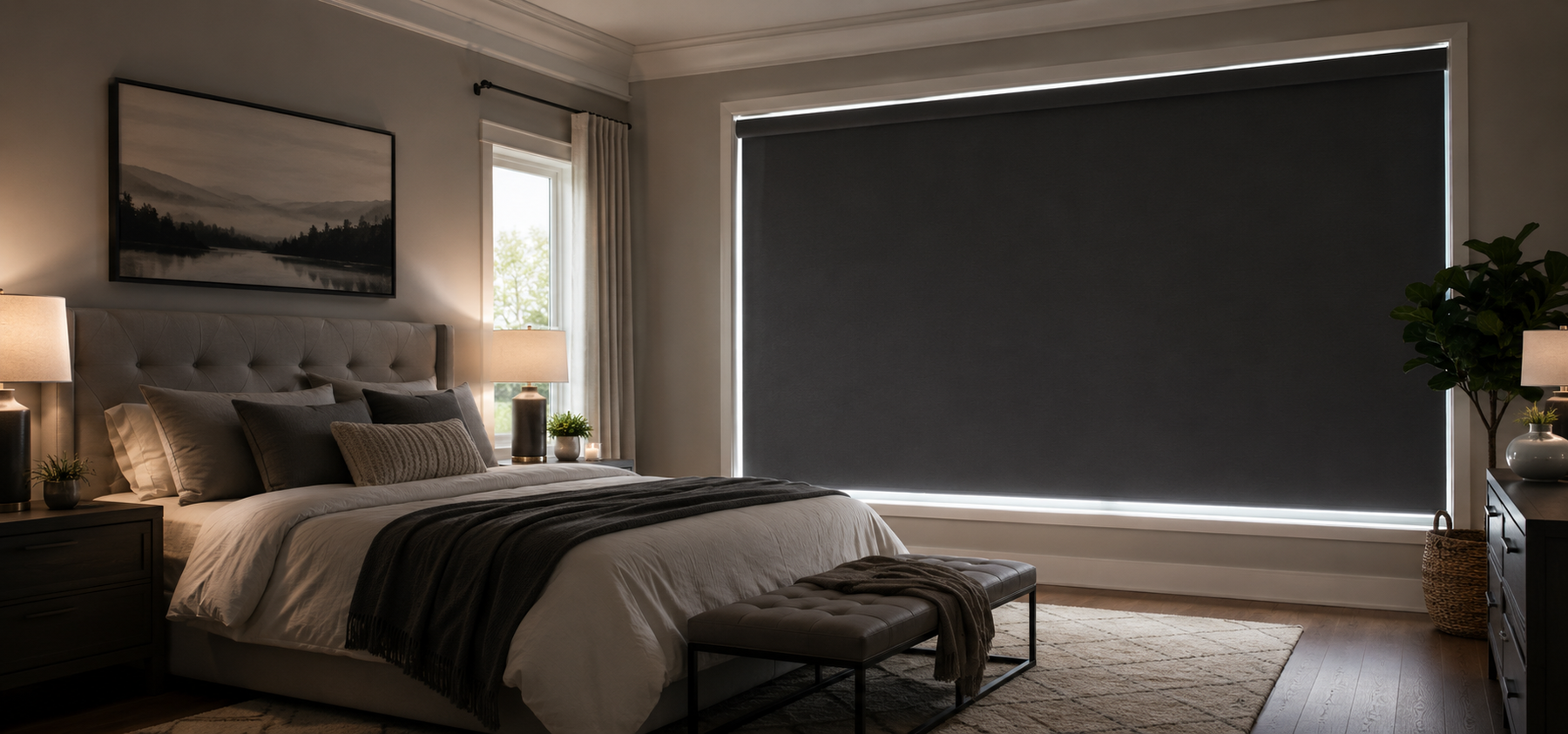
A bright bedroom at 6 a.m. isn't a small inconvenience — it's a sleep disruptor. Even low levels of light exposure during sleep suppress melatonin production and fragment rest, which is why bedroom windows carry more weight than any other room in the house when it comes to light control. Blackout shades for bedroom windows are built specifically to solve this, but not every product marketed as "blackout" actually delivers full darkness.
This guide covers what separates a true blackout shade from a room-darkening one, where most bedroom shades fail, and how to choose a solution that holds up night after night.
Why Bedrooms Need a Different Standard of Darkness
Living rooms and kitchens can tolerate some ambient light. Bedrooms can't — not if the goal is deep, uninterrupted sleep. Sleep researchers consistently point to light exposure as one of the most disruptive factors to circadian rhythm, which means the performance bar for a bedroom shade is simply higher than for any other window in the home.
The most common complaint with standard bedroom blinds isn't the fabric — it's the edges. Light doesn't fail to enter because the material is thin; it enters through the side gaps between the blind and the window frame. This is the detail most buyers overlook, and it's the difference between a shade that looks like blackout and one that performs like blackout.
What Actually Makes a Shade "Blackout"
Three things determine real blackout performance:
Edge sealing — the blind must press against the frame on all four sides, not just cover the glass.
Fabric density — a tightly woven or layered fabric blocks light directly rather than just diffusing it.
Fit precision — a shade cut even slightly too small for the window reintroduces the same light-gap problem edge sealing is meant to solve.
Haven's dual-layer honeycomb fabric and edge-seal track system are engineered around all three, which is why it holds a 100% blackout rating rather than the "up to" claims common with room-darkening blinds. If you want a full technical breakdown of how blackout fabric, layering, and sealing work together, the complete guide to blackout blinds covers the underlying engineering in more depth.
Choosing a Style for Your Bedroom
Not every blackout shade suits every bedroom layout. Cellular shades add thermal insulation and are a strong fit for rooms with temperature swings, while roller-style options suit a more minimal look. If you're deciding between fabric structures, cellular vs. roller blackout blinds walks through the trade-offs in detail, and the types of blackout blinds pillar page breaks down every style available before you commit to one.
For renters or anyone who doesn't want to alter the window frame, it's worth knowing that full blackout performance doesn't require drilling — see no-drill blackout blinds for how tension-mount systems achieve the same edge seal without hardware.
Bedroom-Specific Considerations
Shift workers and nappers need blackout performance during daylight hours, which makes edge sealing even more critical than for standard nighttime use — daylight is far more intense than typical evening ambient light.
Nurseries and kids' rooms benefit from the same full-blackout standard, plus cordless designs for child safety.
Shared or south-facing bedrooms with stronger light exposure should prioritize dual-layer fabric over single-layer options, since single-layer fabrics can still show faint light bleed under direct sun.
If you're weighing blackout shades against curtains, panels, or hybrid setups for a specific room type, choosing the right blackout window covering for your home is a useful next read before you buy.
Frequently Asked Questions
Do blackout shades really block 100% of light? Only if the shade seals the edges as well as the fabric itself. Fabric density alone typically blocks 90–99% of light; the remaining light almost always enters through side gaps, which is why edge-seal track systems matter more than fabric thickness alone.
Are blackout shades bad for airflow or ventilation? Not with honeycomb-style fabric. The cellular structure allows the shade to be partially raised for airflow while still sealing fully when closed, unlike solid blackout curtains.
Can blackout shades help with noise as well as light? Yes. Dual-layer honeycomb fabric traps sound at the window surface in addition to blocking light, which is why bedrooms near street noise often see a secondary benefit beyond darkness.
Do I need professional installation? No. Tension-mount, no-drill systems install in under 15 minutes without tools or wall anchors — see the no-drill blackout blinds guide for the full process.
Getting the Right Fit
Even the best blackout fabric underperforms if the shade is sized incorrectly. Measure width and drop precisely against the window frame rather than the glass alone, since the fabric needs to overlap the frame on all sides to maintain the seal.
For a bedroom that depends on genuine darkness — not the "mostly dark" result standard blinds deliver — custom blackout shades built to your exact measurements remove the guesswork entirely, with a 30-day money-back guarantee if the fit or performance isn't right.
Subscribe to our Newsletter
Stay updated with sleep guides, bedroom decor inspiration, and exclusive product news.
Sarah Jenkins
Contributing writer and editor specializing in light control, bedroom aesthetics, and modern sleep science.


